
Odysseus’ journey: the story and themes
Side 1 of the Journey From Troy: Odysseus board game follows the story of Odysseus’ journey back to Ithaca from Troy.
This epic journey is the most iconic section of the Odyssey, although it actually only takes up 3 out of 24 books (chapters) of the text! The rest of the text, before and after Odysseus recounts his travels, focuses on his return to Ithaca.
We’ll get to Odysseus’ return next, when we release the artwork for the second half of the game, but for now let’s look at Odyssey’s journey, illustrated by sections of side 1 of the board.
Xenia and nostos
Xenia (how you treat guests) and nostos (homecoming) are two ancient Greek ideas that The Odyssey is really all about.
In ancient Greek custom, the rules of xenia were the domain of Zeus, king of the gods. Therefore, not obeying these rules could have disastrous consequences. Guests could ask for hospitality at the house of a stranger and expect food and drink, a place to sleep, and protection. The host and guest exchanged gifts according to their means, forming a friendship between their families.
Throughout the Odyssey, there are examples of xenia being broken, and the punishments that come to those who do so.
Nostos is the force behind the story of a hero returning home, and the trials they face on their journey. It is the desire to return home that drives them. It can be recognised in the English word ‘nostalgia’.
Odysseus’ nostos is clearly a big theme in The Odyssey, but throughout the story, we see many other examples. The story begins with Odysseus’ son, Telemachus, going on his own adventure to find news of his father, with the help of Athena. He hears the tales of the nostos of other heroes of the Trojan War, like Nestor and Menelaus.
The story then moves to the last part of Odysseus’ journey, where he is released from Calypso’s island, makes it to the land of the Phaecians, and tells them the story of how he got there as his part of the exchange of xenia…
The journey
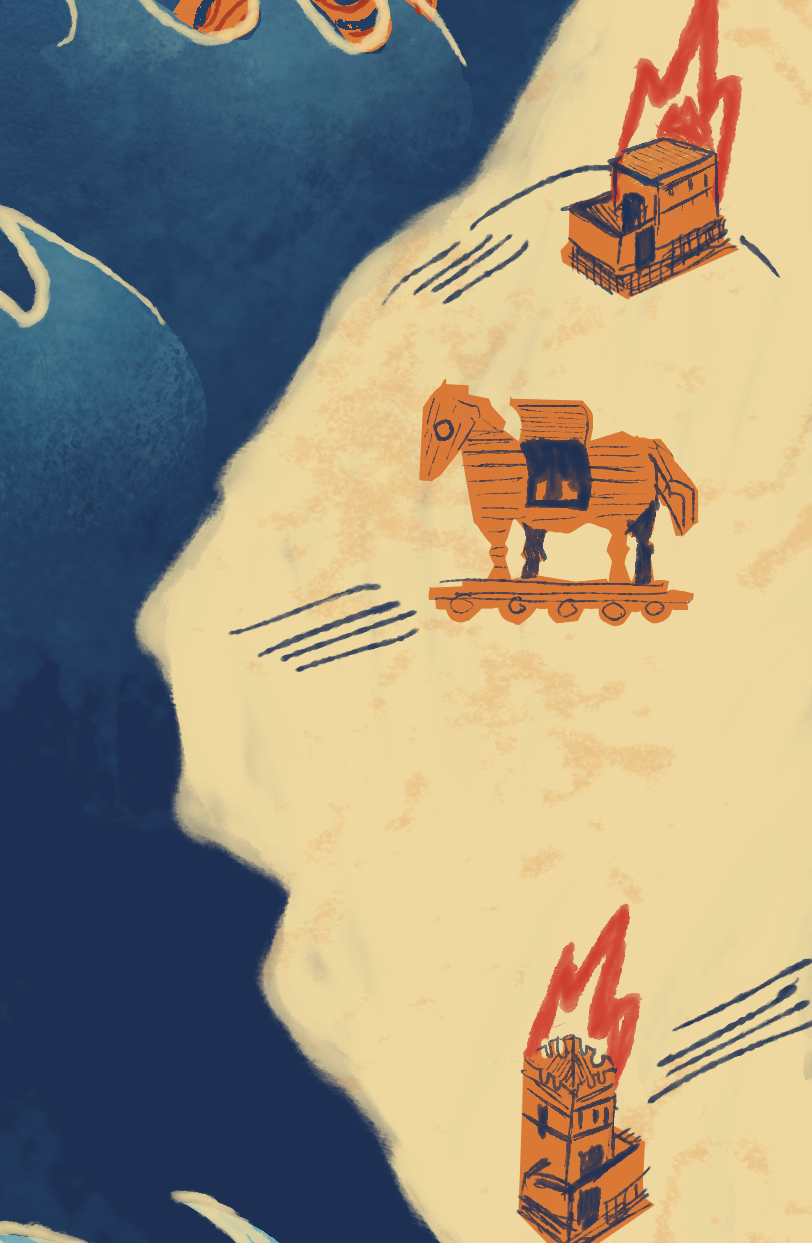
Odysseus reveals to the Phaecians that he is the legendary hero that their bard is singing of, and tells them how the Greeks sacked Troy by hiding inside a wooden horse.
When the war is won, he sets sail for home with his men. But this is where the trouble begins. First, they stop off to plunder the city of the Cicones, but stay too long revelling and are caught out by reinforcements. Six men from each ship are killed.
Then, they come to the land of the Lotus-eaters. Odysseus’ scouts eat the fruit and forget their nostos, wanting to stay forever, until Odysseus drags them away.
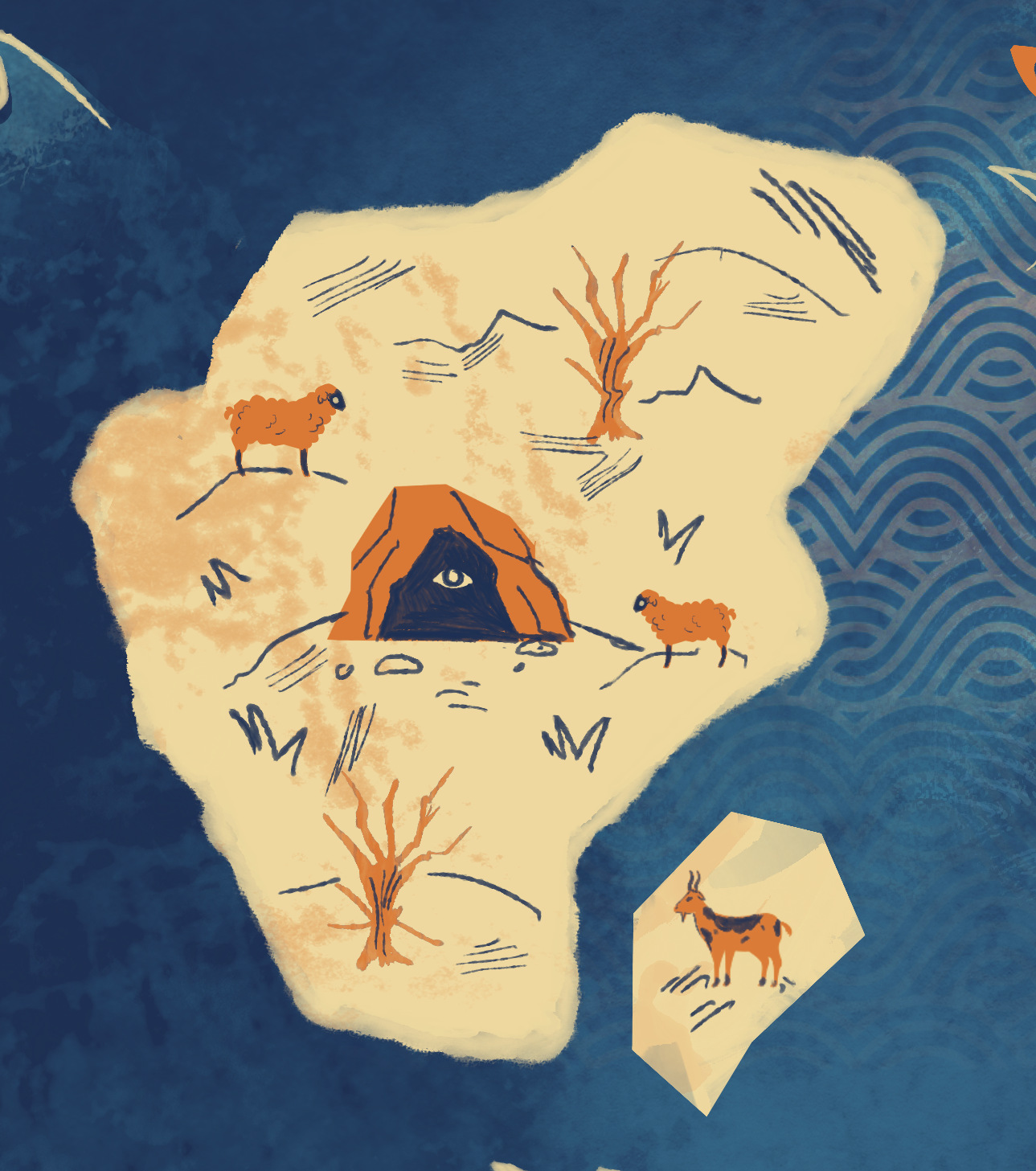
Next, they come to an untouched island, where they fill themselves on wild goat. However, Odysseus decides to take a group of men to the island next door, the land of the Cyclopes, in hopes of gifts of xenia.
Instead, the Cyclops Polyphemus kills and eats his men, and traps them in his cave with a rock too heavy for any human to lift. Odysseus conspires with his remaining men to get Polyphemus drunk, and while he is sleeping, drive his walking stick, sharpened and heated, into Polyphemus’ eye. This is Polyphemus’ punishment for not obeying the laws of xenia.
Polyphemus shouts for help, but Odysseus has pretended his name is ‘nobody’, and so the Cyclops calls out that ‘nobody is hurting him’. Odysseus and his men escape clinging underneath Polyphemus’ flock of sheep. Polyphemus calls on his father, Poseidon, the god of the sea, for revenge.
They make it to the home of Aeolus, master of the winds, who presents Odysseus with a xenia gift of a bag containing all the winds, so that only the western wind would blow Odysseus home. This gets them all the way to within sight of Ithaca on the horizon, and for the first time, Odysseus relaxes.
But while he’s asleep, his men think the bag is a gift of treasure that Odysseus hasn’t shared, and decide to open it. The winds drive them all the way back to Aeolus, who this time refuses to help.
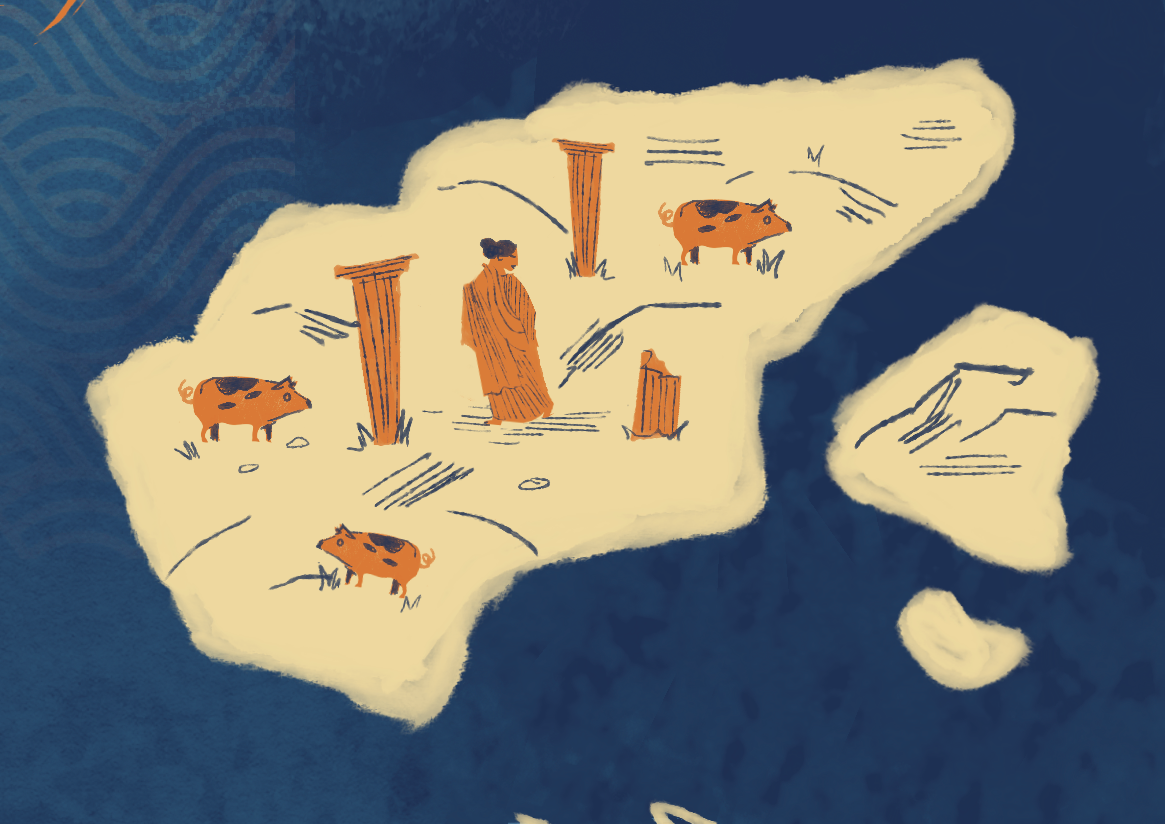
After an unfortunate encounter with a race of giants, the Laestrygonians, Odysseus’ ship is the only one to make it to Aeaea, the island of the witch, Circe.
Circe drugs a group of Odysseus’ men and turns them into pigs with her wand. Only one of them makes it back to tell Odysseus what has happened. On his rescue mission, Odysseus is visited by Hermes, who gives him an antidote to Circe’s magic. He overpowers her and makes her return his men.
Odysseus stays with Circe for a year, until the pull of nostos is too great for his men. Circe tells Odysseus what he must do to get home safely.
Following Circe’s guidance, Odysseus sails to the underworld, where he prepares libations (offerings of poured liquid) and sacrifices to attract the spirits of the dead.
Here, Odysseus hears of the nostos of his comrades who died in or after the Trojan War, including Achilles who laments his fate, and Agamemnon who tells of how his wife, Clytemnestra, murdered him on his return.
Odysseus also laments the sight of his own mother, who died of heartbreak while he was away.
But the reason he is here is to see the blind prophet, Tiresias. Tiresias tells him that Poseidon is causing their suffering in retribution for Polyphemus, and that his suffering will not end when he gets home.
Odysseus returns to Aeaea to bury Elpenor, a crewmate who died there without their knowledge. Before they leave once more, Circe advises them on the next stages of their journey.
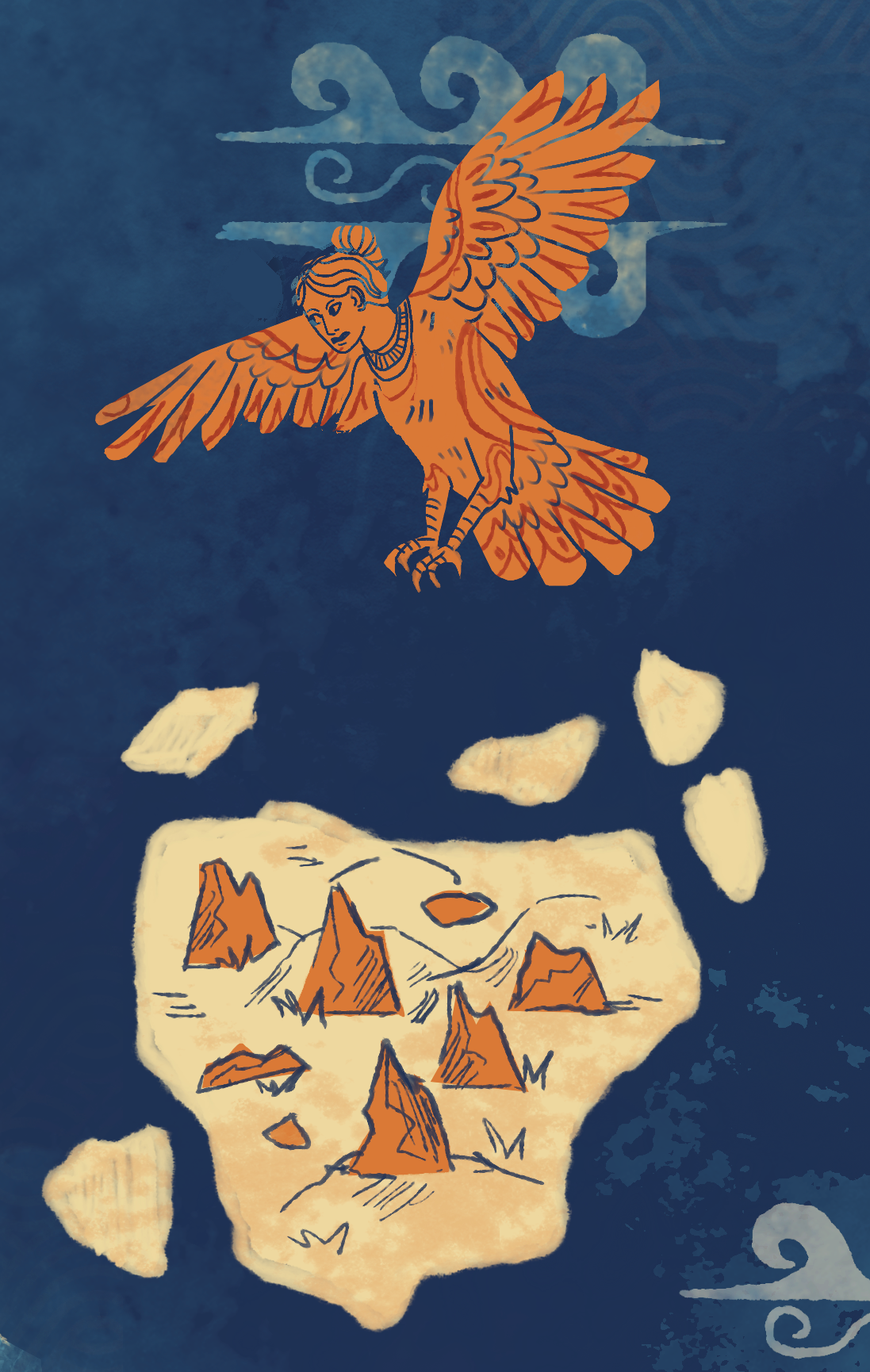
Next up are the sirens, bird women who lure sailors to their deaths with promises of knowledge and revelations. Odysseus plugs his men’s ears with wax so they cannot hear, and makes them tie him to the mast, promising not to release him no matter how much he struggles to hear more of their song.
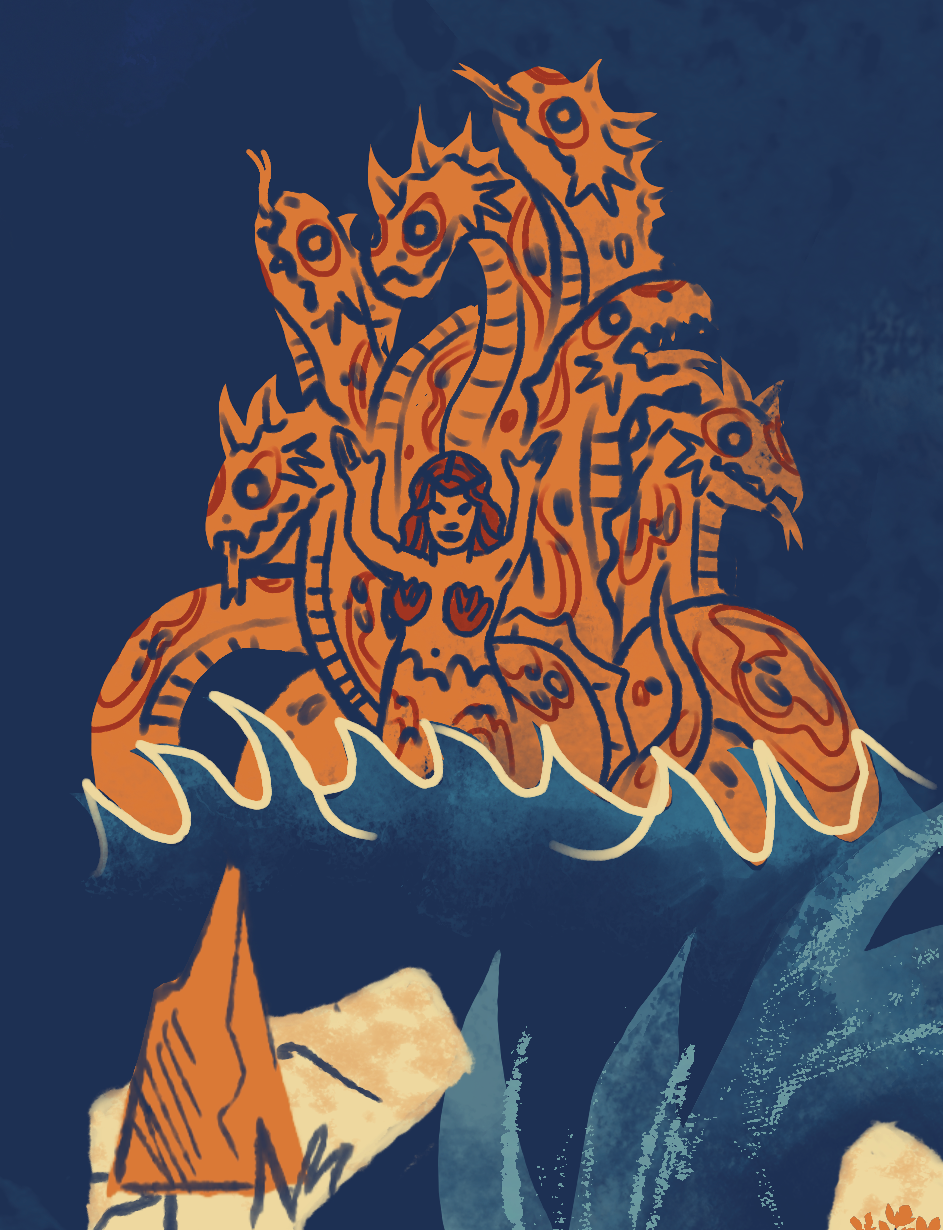
Then comes, a choice: Scylla or Charybdis. Scylla is a six-headed monster who sits in her cave, high up a sheer cliff, and picks men off the decks of ships, one with each head. Charybdis sucks in the ocean, then spits it back out, in an in-survivable whirlpool. The space between Scylla and Charybdis is so narrow that they cannot be entirely avoided.
Odysseus chooses Scylla, sacrificing six men to pass through with the rest.
Finally, they arrive at the island of the sun god’s cattle. Odysseus tells his men not to poach them, but a storm keeps them stuck on the island. Grieving, tired, and hungry, the men ignore his wishes while he is away. Helios, the sun god, reports this to Zeus, and as they sail away, Zeus stirs up the crew’s final storm.
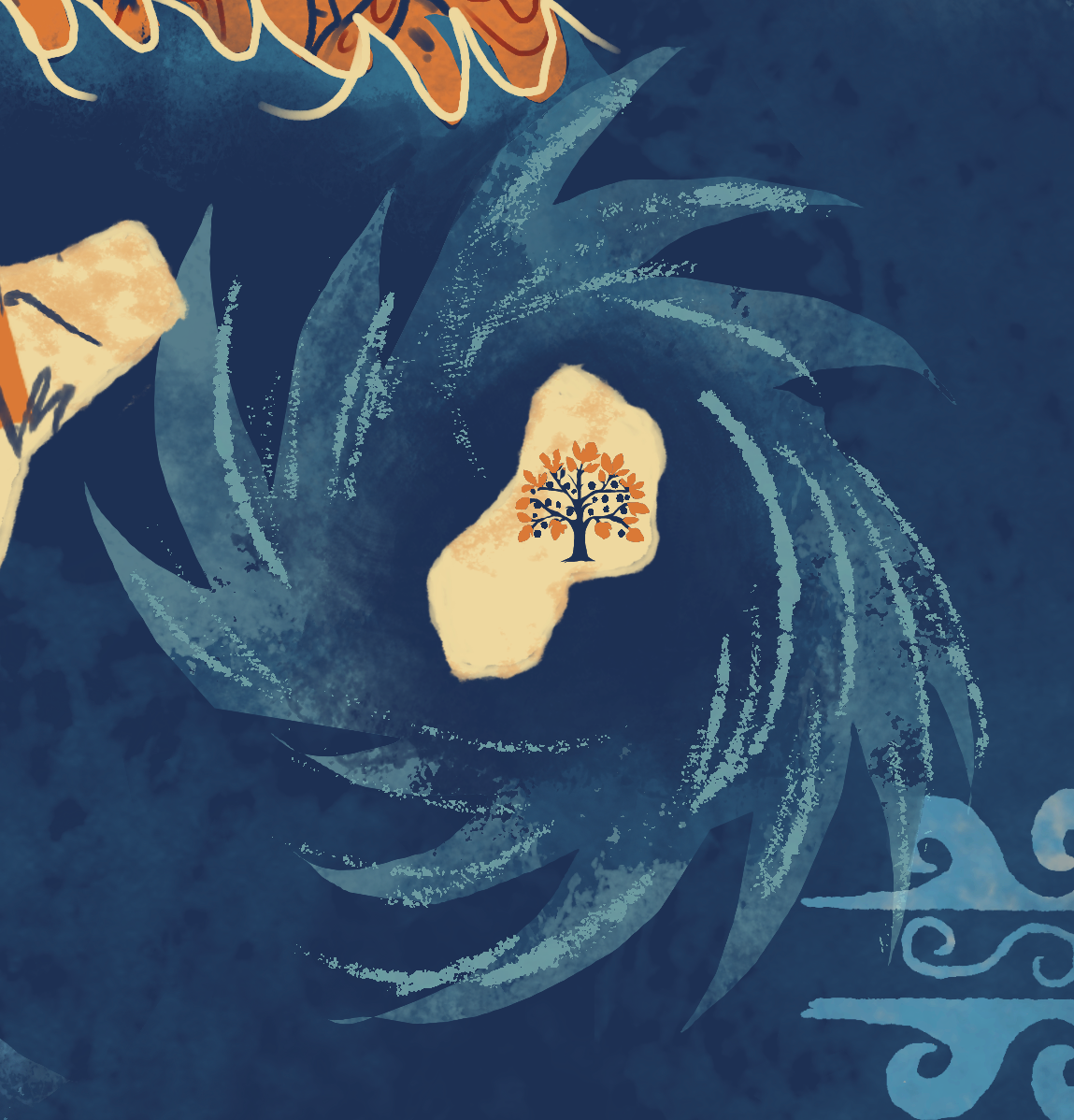
Only Odysseus survives, and, clinging to the broken ship, is driven back to Charybdis. He jumps and clings to a fig tree on the rock above her, waiting until she spits the broken ship back out to sail away.
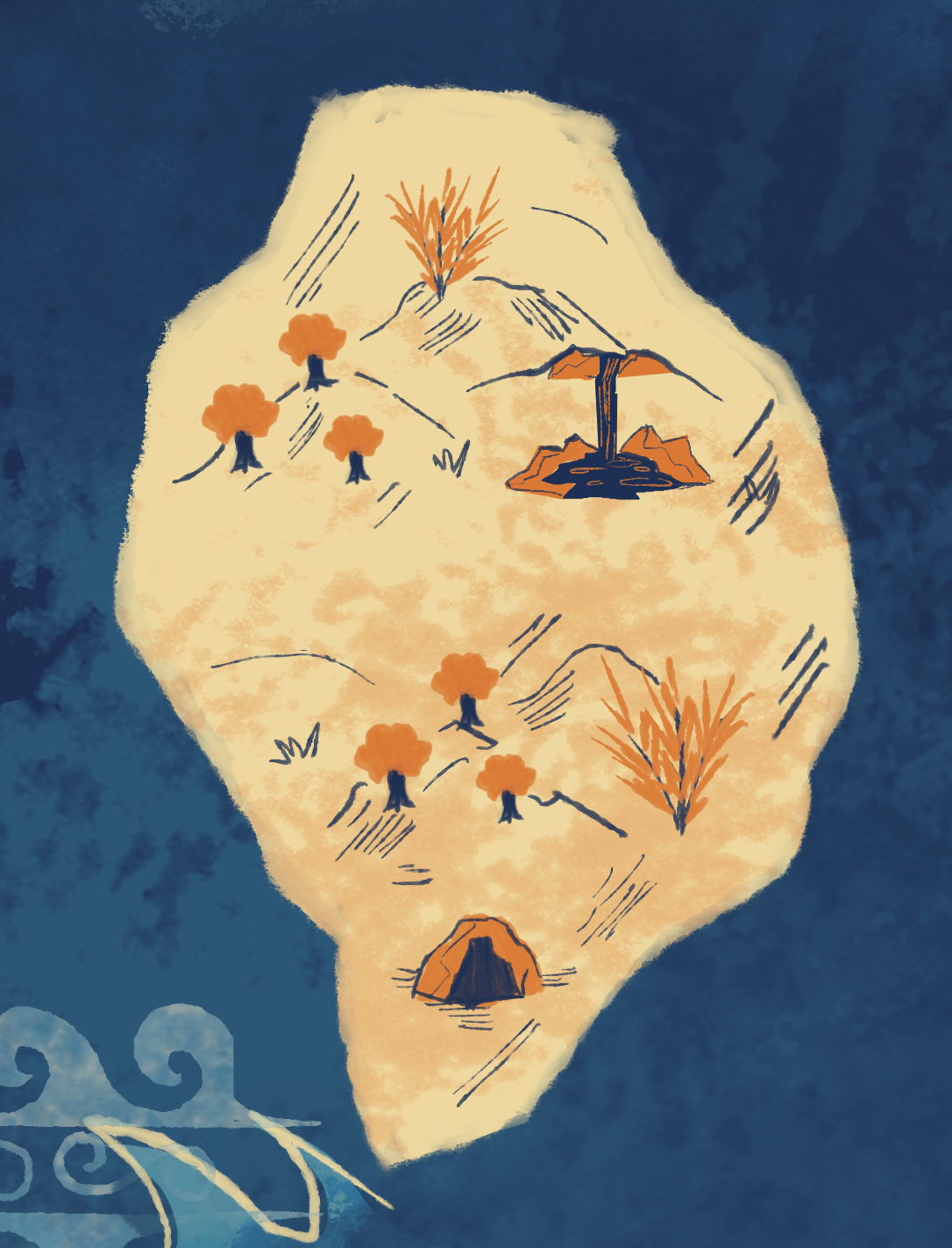
At last, Odysseus comes to the verdant island of Ogygia. Here, the goddess Calypso keeps him for seven years, hoping to make him her immortal husband, until Hermes is sent by Zeus to make her release him.
Surviving a final storm sent by Poseidon, Odysseus makes it to Scheria with the help of the nymph Ino, where he begs the king of the Phaeicians for xenia, and tells them his story.
Finally, Odysseus is able to get back to Ithaca with the help of the Phaeicians, with more treasures as gifts of xenia from them than he left Troy with. The story of The Odyssey continues on Ithaca, on side 2 of Journey From Troy.
All illustrations by Lizzie Styles (@too.small.for.you on Instagram). You can see more of the game’s artwork on our Instagram page or mailing list.