
Early Pompeii
Pompeii was originally founded by an Oscan-speaking tribe from the Campanian region of Italy.
Many nearby cities were inhabited by Etruscans (a tribe from further North in Italy) or Greek settlers, who were often fighting each other for control of the area.
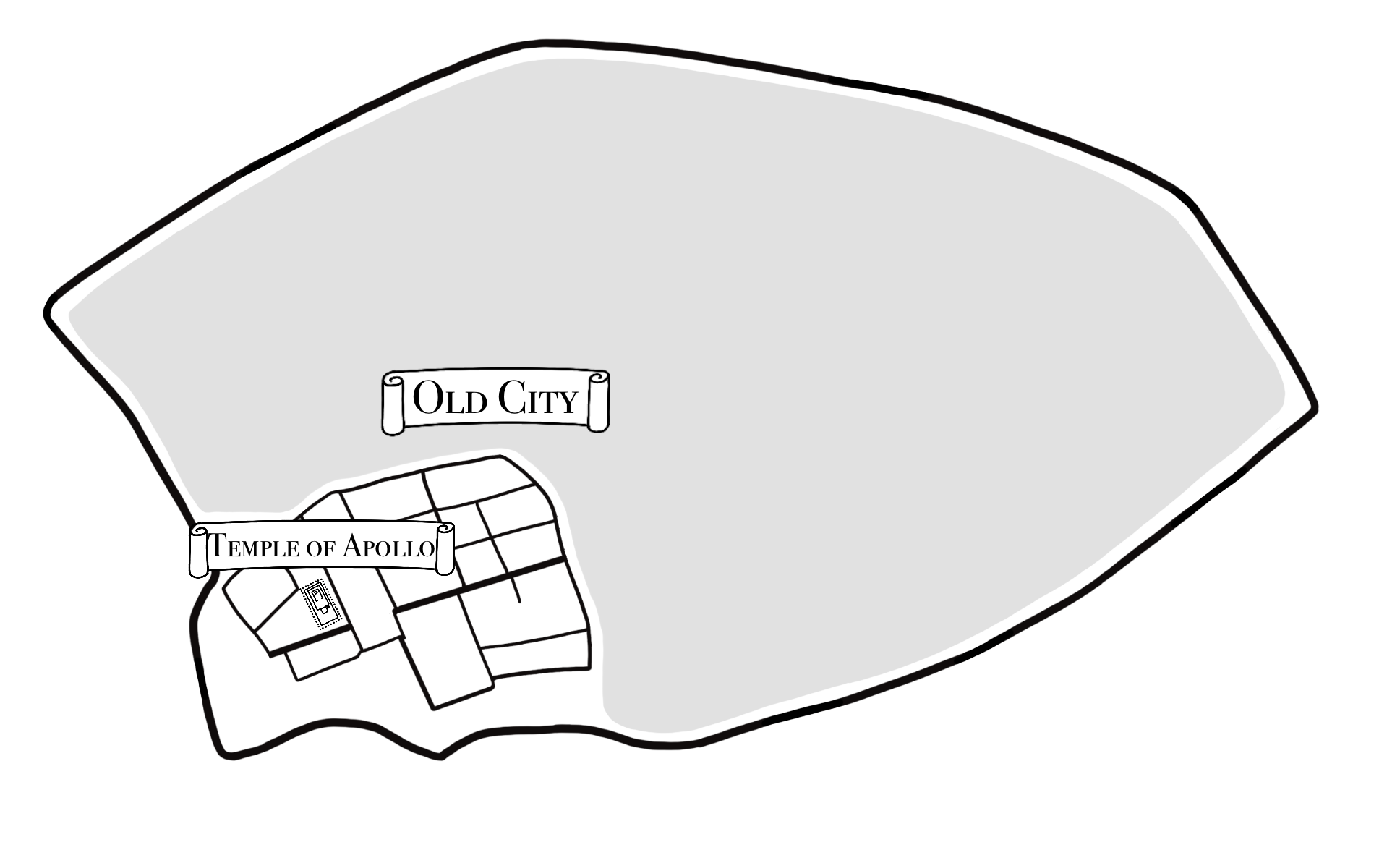
Pompeii grew around a sanctuary to Apollo, in the south-west corner of its eventual footprint. The city walls were laid out in the 6th century BCE, protecting the small town and its fields, pastures, and vineyards.
Samnite Pompeii
In 474 BCE, the Etruscans were defeated by the Greeks and retreated from the area. Shortly after, the Samnites, another Oscan-speaking tribe from the Apennine mountain range, began to expand down into Campania. By 420 BCE they had taken control of the area, including Pompeii.
Then, in the 300s BCE, the Roman Republic expanded through Italy and down into Campania. After the ‘Samnite Wars’ of the late 4th century BCE, Pompeii and the surrounding towns were made allies of Rome.
This meant they had to support Rome in wars and alliances, but Pompeii still technically belonged to the Samnites.
Pompeii grew quickly in the 3rd century BCE. With new access to Rome’s trade routes and the eastern Mediterranean, Pompeii’s position at the mouth of the River Sarno and the edge of the Bay of Naples made it a perfect place for trading.
Towards the end of the 3rd century BCE, Hannibal invaded Italy, and many surrounding towns were destroyed, which resulted in an influx of new inhabitants for Pompeii.
Roman Pompeii
In 91 BCE, Pompeii joined forces with several other Italian allies of Rome, frustrated with their end of the deal with the Romans, and began the Social War.
In 89BCE, the Roman general Lucius Cornelius Sulla (later to become an infamous dictator of Rome) besieged Pompeii. Bullet and ballista holes can still be seen in the walls of Pompeii from the assault.
Pompeii and the allies lost the war. They were given Roman citizenship, but in 80 BCE, Pompeii was made a colony of Rome.
Thousands of Sulla’s veteran soldiers were given land in Pompeii, some taken from Samnite families. Latin became the official language. The governmental structure of Pompeii was changed to mirror Rome’s, and Oscan family names disappeared from records of government officials, replaced from then on by Roman names.
Pompeii’s official name was changed to Colonia Cornelia Veneria Pompeianorum (the Cornelius Venus colony of Pompeii) after Sulla.