
Over half the houses in Pompeii were built in an atrium-style. The atrium was a large central room which the front hall and lots of other smaller rooms opened onto. Larger houses might also have a second set of rooms behind this with a garden at the centre instead of another atrium.
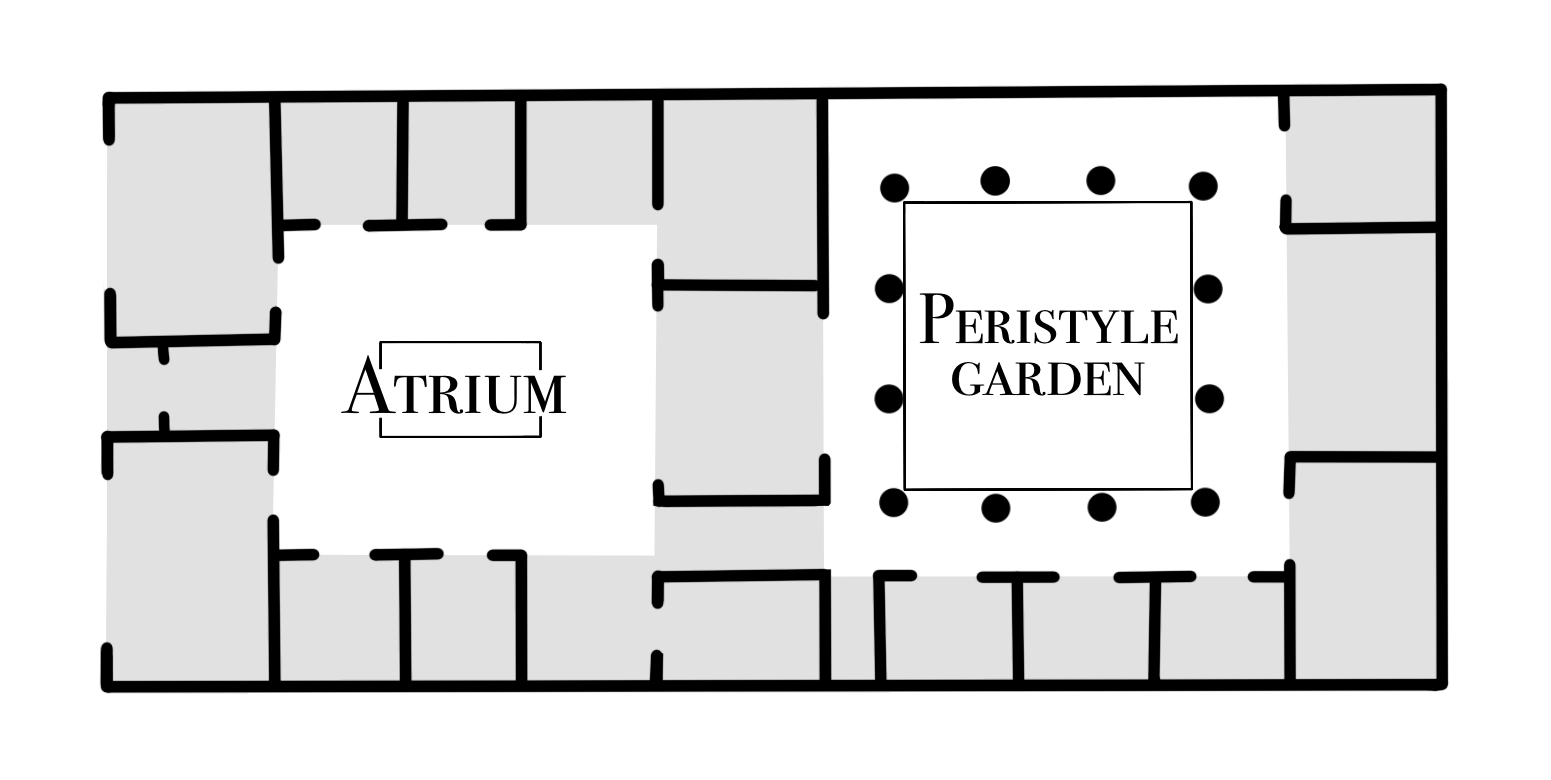
These atrium-style houses ranged from very small abodes with just a few rooms, to huge palace-like urban villas.
From the street, the atrium was the first room a visitor would come to. As the main place for greeting and entertaining guests (along with the tablinium behind it), the atrium was often lavishly decorated to show off the best the family could afford.
The atrium wasn’t just a reception room – it was the centre of a busy household. It was used for storage, movement, and household tasks. The atrium held cupboards and chests full of household items: from lamps, glassware, and food, to dice, playing pieces, and bronze signature seals. It was also the room where looms and other equipment for weaving were kept and used, often as the only room big enough for a loom.
In the middle of the room was a shallow rectangular pool and above it was an opening in the ceiling of similar size and shape, to allow rainwater to be funnelled down the sloped roof tiles into the pool. This hole in the roof was called a ‘compluvium’ and the pool underneath, an ‘impluvium’.
The rooms off the atrium were more private and guests needed an invitation to enter them. They were designed to be less visible from the entryway than the atrium and tablinium, although spaces anywhere around the house could be blocked off with wooden screens.
Some rooms were for storage, with ones around the garden more likely to be for food preparation, and larger rooms were often for dining.
Some rooms were decorated, and stored small personal items; it is possible that they were bedrooms but it is more likely that Pompeians slept wherever was convenient. Having a dedicated bedroom for each individual is a more recent phenomenon. Most of the house was multi-purpose.